A First Visit to a Community Sports Day
A first visit to a community sports day feels easier with a simple plan for what to watch, where to go and when to leave at your own pace.
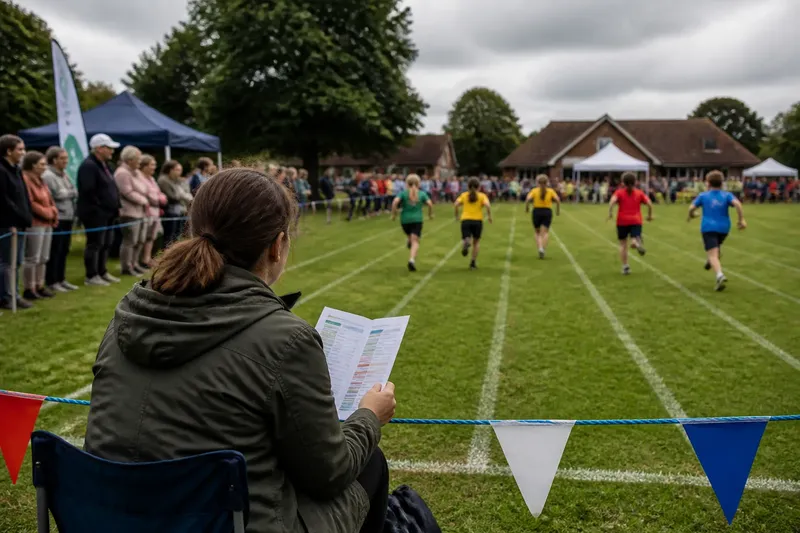
A first visit to a community sports day is easier when you choose one event to watch and decide how you will move around the venue. A programme, a clear entrance and a flexible plan give the day shape without turning it into a timetable.
Choose an event that gives your visit a centre
Look at the noticeboard, printed programme or event page before you arrive, then pick one activity that genuinely catches your attention. It might be a tug of war, a junior relay, a bowls match or a demonstration of a sport you have never seen. Settling in for one event lets you notice the rhythm of play and the small details that can disappear when you hurry from one contest to the next.
Check where spectators are expected to stand or sit. A folding chair may suit a field event, while a clear view from the edge of a court might be easier if the crowd moves around. If the boundaries are unclear, ask an organiser where visitors can watch without crossing the playing area.
You do not need to know the rules. Follow the players’ movement, notice how teammates encourage one another, or watch how the crowd responds when the action changes. A programme or a quiet question to an organiser can help explain a moment that puzzles you.
Let the venue guide your route
Rather than trying to see everything, use the programme and signs to choose a simple route: the entrance, your chosen viewing spot and one place to pause between events. Notice where visitors are welcome, and avoid changing areas, equipment stores and active playing space.
Imagine you arrive at a school field with a programme showing a relay followed by a bowls demonstration. You watch the relay from behind the marked boundary, then follow a sign to the community hall while the next event is being set up. You read the club notices there and return when the announcer calls spectators back. The result is a visit with a clear beginning, a pause and another event, without rushing between every activity.
Between contests, look for details that give the gathering its character: a table displaying old trophies, scorecards being arranged or a refreshments tent. You can enjoy these without buying anything or turning every stop into a conversation.
Set a finish line that suits the day
Before leaving home, decide what would make the visit feel complete. It could be watching one event, taking a look around the grounds and having a rest before heading home. If you find yourself enjoying the atmosphere, stay for another contest; if your attention or energy fades, leaving is a perfectly good choice.
Take note of one detail you would like to remember, such as the starter’s bell, a team’s colours or the way spectators lined the rope. There is no need to photograph everything. If you take pictures, be considerate around children and ask before making someone the subject of a close-up.
Check the practical details before you leave
A little preparation can prevent avoidable snags. Use this list to make a decision based on what you find:
- Check the venue address and public entrance; if they are clearly listed, save or note them, and if they are missing, contact the organiser before setting off.
- Check the programme for your preferred event and a second option; if timings are posted, choose one to watch, and if they are uncertain, plan to ask an organiser on arrival.
- Check the expected ground and your footwear; if the event is on grass or gravel, choose shoes suited to uneven ground, and if it is indoors, choose comfortable shoes appropriate for a sports hall.
- Check the forecast and venue guidance; if rain or a cool spell is expected, bring a suitable layer, and if the venue has rules about bags or equipment, leave anything restricted at home.
- Check whether water is available or permitted; if you are unsure, bring a refillable bottle only if venue guidance allows it, and otherwise ask an organiser about refreshments.
- Check the spectator boundaries when you arrive; if signs mark a viewing area, stay within it, and if they do not, ask a steward before choosing a spot.
- Check how you will get home and how much time you want to spend there; if you have a clear return plan, follow it, and if the day is still enjoyable, decide whether another event fits your plans.
It is not worth trying to memorise every rule, team name or result before you arrive. That can make a casual visit feel like homework; a programme and a willingness to follow what is happening are enough.
What should you expect on your first visit?
Do I need to know the rules before I go?
No. Choose an event that interests you and watch how it unfolds. If a rule affects what you are seeing, check the programme or ask an organiser during a pause.
Can I attend for only one event?
Yes, if the event is open to visitors and the venue has no special attendance arrangements. Check the programme and any entry guidance so you know where to go and whether you need to speak to an organiser on arrival.
What should I bring to a community sports day?
Comfortable footwear, a weather-appropriate layer and water are sensible starting points, subject to venue guidance. Check the event information before packing a chair, large bag or other bulky item.
How do I know when it is time to leave?
Leave when you have seen the event you came for or your attention and energy begin to fade. If you are still enjoying the day and have time, you can stay for another contest or pause for refreshments.
A first visit to a community sports day can be simple: find the public entrance, settle somewhere appropriate and let the programme shape your next move. Keep the venue’s guidance to hand, and you can make a return visit based on what you genuinely enjoyed rather than a sense of obligation.